
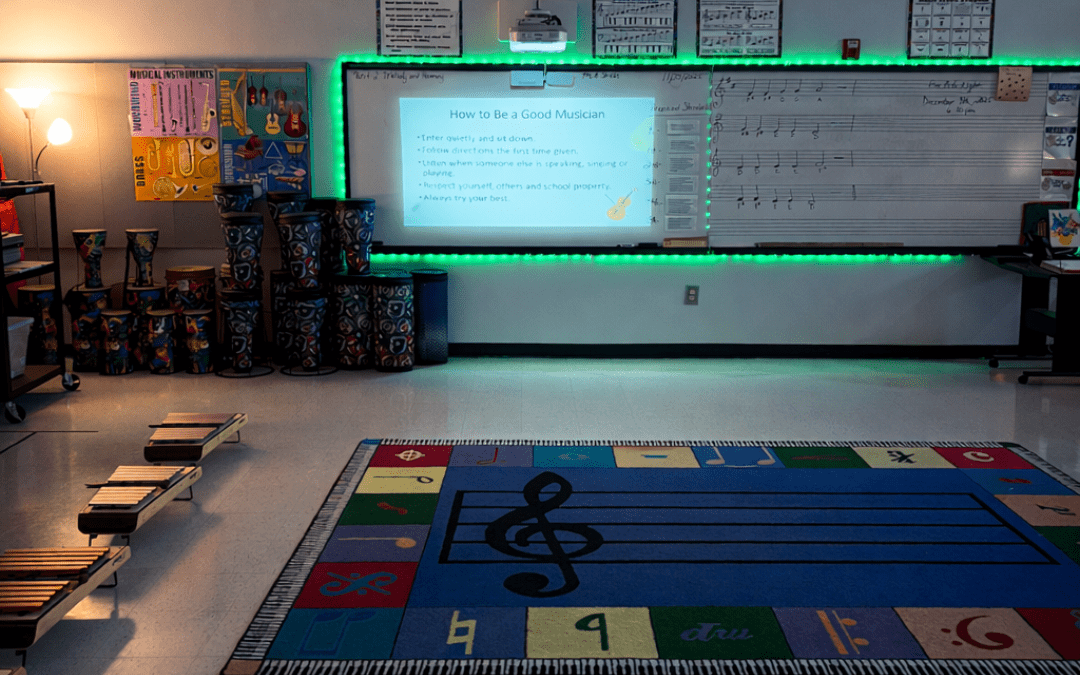
We’re on a mission to restore and sustain music education in public schools nationwide. Music builds belonging, sparks motivation, and creates meaningful connections that help students feel seen and invested in their learning. Weaving music into the curriculum reengages students, strengthens school communities, and tackles absenteeism in education at its root.
When students don’t attend school, they miss out on much more than learning time; they also miss out on opportunities to build relationships, routines, and shared experiences that make school feel like a place where they belong.
Recent data from the U.S. Department of Education and Attendance Works show that in many urban school districts, more than 30% of students were chronically absent during the 2024–2025 school year. Additional youth surveys suggest that roughly one in four young people does not view chronic absence as a serious issue, highlighting a growing concern between students and their schools.
What Is Absenteeism in Education and Why It Matters
Absenteeism in education refers to how often students miss school, regardless of whether absences are excused (e.g., for illness) or unexcused. One of the most widely used benchmarks is chronic absence, which is typically defined as missing 10% or more of school days for any reason (about 18 days in a 180-day year).
Here’s why chronic absences matter:
- Academic achievement: Missing instructional time early and often can make it harder to build foundational skills and keep pace.
- Long-term opportunity: Consistent engagement in school helps students build momentum that supports future academic, career, and life pathways.
- Graduation pathways: Attendance patterns can compound over time, influencing course completion and long-term outcomes.
- School funding and stability: Frequent absences can affect planning, staffing, and support capacity, affecting how schools can best meet the needs of all students.
When missed days mount up, the impact on learning, connection, and routine grows. That’s why both excused and unexcused chronic absences are such critical areas of focus for schools and communities alike.
Understanding the Chronic Absenteeism Crisis in Today’s Schools
Chronic absenteeism in education is not isolated to particular regions. In fact, the U.S. Department of Education’s chronic absenteeism data show that in no fewer than 20 states, students frequently miss the equivalent of three or more weeks of school each year. However, a Policy Analysis for California Education report on California’s chronic absence crisis shows higher rates in communities facing greater barriers to consistent access and in schools serving a higher number of students experiencing economic hardship. Chronic absenteeism is not specific to any city, state, or region. However, communities that face unpredictable environments often experience increased student absences from school and youth programs.
When habitual absence is common, the effects ripple through entire school communities:
- Learning sequences are disrupted, making it harder to build knowledge coherently.
- Educators must attend to repeating material, reducing time for enrichment and deeper learning.
- Peer collaboration becomes harder to sustain, weakening classroom relationships and continuity.
Over time, these dynamics can strain school communities, complicate instructional teaching and learning, and disrupt day-to-day decision-making. They may also erode overall community trust, making it harder to sustain a stable, positive learning environment.
What Are the Causes of Absenteeism?
Attendance is closely linked to how students experience school on a day-to-day basis, with common drivers often falling into the following key categories:
- Disengagement or low relevance: When school doesn’t feel meaningful, students may struggle to stay motivated.
- Mental health and social-emotional barriers: Without trusted support, stress, anxiety, and emotional overload can make attendance feel hard.
- Feeling disconnected or unsafe: If students don’t feel known, valued, or protected, they’re less likely to show up consistently.
- Family and community barriers: Health needs, caregiving responsibilities, housing insecurity, etc., can all disrupt routines in ways students are unable to control.
Addressing these underlying causes of chronic absenteeism requires more than policies, engagement, or reminders. Schools, with their families, communities, and local leadership, should team together to focus on specific strategies that help rebuild connections, restore relevance, and encourage students to attend. Music education can be one of those strategies, helping to strengthen belonging and engagement, making school feel meaningful and worth showing up for.
Evidence Linking Music Education and Improved Attendance
A growing body of research suggests that arts participation—particularly music education—is linked to stronger student engagement and improved attendance outcomes. A longitudinal study of Boston Public Schools found that students who enrolled in arts courses experienced improvements in chronic absenteeism rates compared to their peers. Teachers in the same study also reported higher levels of student and parent engagement when arts access expanded.
An EdResearch for Action brief on school connectedness and attendance notes that students who feel emotionally invested in their school community are more likely to attend consistently and experience better academic and graduation outcomes. Together, these findings suggest that when schools foster engagement and belonging, attendance improves—and music education is one pathway that supports those conditions.
How Music Education Supports Attendance and Student Engagement
Music education supports attendance not through compliance or academic incentives, but by shaping how students engage with learning emotionally and socially. Music learning creates structured opportunities for connection, self-expression, and shared purpose, helping students to find a sense of identity within the school community.
Music Builds Belonging and School Connection
Music education is inherently communal. Whether students participate in band, choir, orchestra, or musical production, they are part of something larger than themselves. Enhanced peer connections encourage a shared sense of identity where students feel recognized as contributors, making attendance more likely.
Music Increases Motivation and Joy in Learning
Music provides students with opportunities to explore their creativity, express their interests and cultural influences, exercise choice, and experience tangible progress. The moments of joy derived through practice and performance can make school feel worth returning to, especially for those who typically feel disengaged in more traditional academic settings.
Music Supports Social-Emotional Learning and Well-Being
Creating and performing music encourages emotional expression, builds confidence, and fosters collaboration skills that help students successfully navigate the broader school environment. A literature review on music education and social-emotional learning synthesizing more than 100 international studies highlights connections between music participation and social-emotional skill development, including emotional regulation, empathy, social relationships, and student well-being, which can contribute to a healthier school climate.
The Save The Music webinar series and accompanying resources, Student Empowerment Through SEL and Music Education, helps educators better understand how to elevate the lived experience, voices, and cultural assets of their students through the development of exemplary music education practices and approaches.
Save The Music’s Role in Reengaging Students Through Music Education
At Save The Music, we strive to ensure that music education is a consistent and sustainable part of the school experience by:
- Restoring and sustaining music programs in public schools.
- Providing grants and instruments that remove barriers to participation.
- Supporting educators and administrators with resources and long-term program guidance.
- Advocating for equitable access to music education at local, state, and national levels.
Helping schools offer reliable, well-supported music learning opportunities opens the door to experiences that inspire lasting connection and engagement. When music is consistently embedded into the school day, it can reignite students’ relationship with school, making learning more meaningful and regular attendance more attainable.
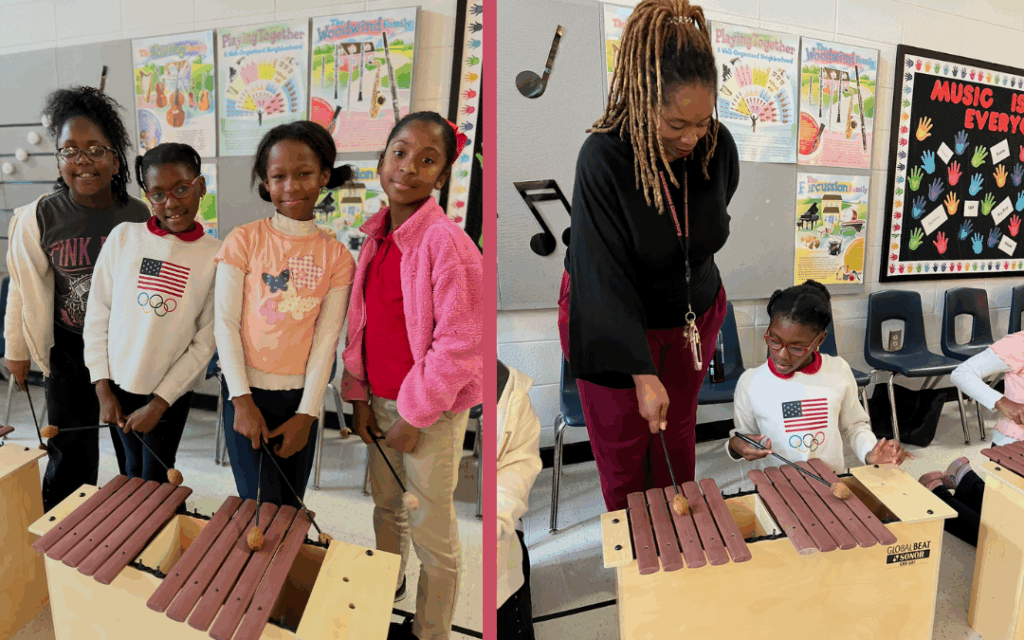
Reconnect Students to School Through Music Education
Chronic absenteeism in education goes beyond missed days, leading to missed connections. When students feel disengaged or unseen, showing up becomes harder. But when they feel supported, valued, and part of a community, consistent attendance follows.
Music education helps create those conditions as much as possible. By strengthening belonging, motivation, and emotional connection, music education resources can help reengage students and strengthen the health of entire school communities.
If you believe every student deserves access to the power of making music, you can make a difference. Donate now to help us restore and sustain programs in public schools nationwide.