
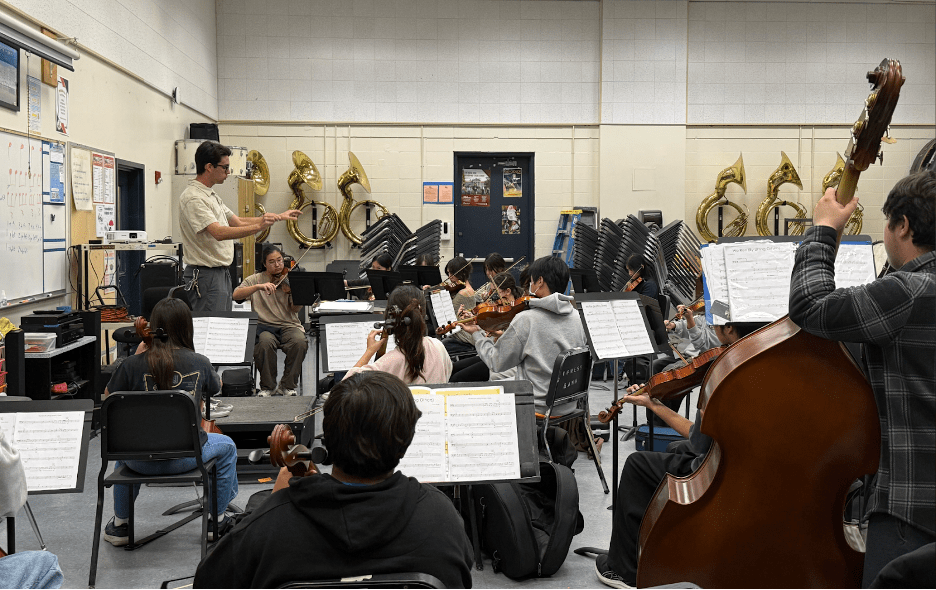
Long before adulthood, leadership skills are built in classrooms, rehearsal spaces, and on school stages. Few environments cultivate those qualities as consistently as music education.
Whether students are playing within an ensemble or performing a solo, they practice what it means to show up for themselves and others. Collaboration, communication, accountability, and confidence grow as they perform together.
This connection between music education and leadership is part of a broader national conversation about student development. At events like Remix The Industry, Hometown to Hometown, the annual NAMM Show (National Association of Music Merchants), and NAfME state conferences (National Association for Music Education), educators, advocates, and nonprofit leaders explore how expanding participation in music programs shapes opportunity nationwide.
Organizations like Save The Music are advancing that work, expanding access so more students can participate regardless of background or location. As participation grows, so does the number of students who develop into confident leaders.
Leadership in Music: A National Conversation Gaining Momentum
Save The Music recently joined the Music IS Education coalition, a group of organizations that believe music education is crucial to the development of all students. Across the country, there is growing recognition that music programs are essential spaces where students build real-world skills.
That national dialogue is increasingly centered on:
- Expanding equitable access to music education
- Strengthening student engagement and belonging
- Preparing students for the workforce through college and career pathways
In strong music programs, leadership is developed through structure and shared responsibility. Students take ownership of their roles, support their peers, and build confidence through rehearsal and performance.
Save The Music works to expand participation in music education across the country through partnerships with local and national organizations as well as school district leaders. While these conversations take place between advocates and champions of music education, their real impact unfolds daily in music classrooms.
The Natural Connection Between Music and Leadership
Student leadership is about taking initiative, honoring commitments, and working collaboratively toward a common goal. Students rely on one another to stay in rhythm, enter on time, and execute their part. Responsibility is reinforced in every rehearsal and performance.
Ensembles, in particular, function as leadership labs. Students grow by:
- Working toward shared musical goals
- Trusting peers to execute their individual parts
- Practicing mutual accountability
Music classrooms mirror real-world environments where outcomes depend on trust and collective responsibility. Research also supports what music educators see every day: a 2023 research review published in Education Sciences found that music education contributes to the development of essential “soft skills,” including leadership, teamwork, communication, and interpersonal collaboration—competencies widely recognized as foundational to effective leadership.
Music classrooms have also become important spaces for rebuilding connection and belonging. Ensemble participation gives students a shared purpose, a welcomed way to express themselves, and a community where their contributions matter. Those conditions strengthen not only social-emotional development but also the confidence required for leadership.
How Ensemble Learning Builds Core Leadership Skills
Ensemble learning places students in real-time situations where leadership is practiced, shaped, and refined through shared performance and collective accountability.
Collaboration and Teamwork
In an ensemble, students listen and respond in real time. They adjust tempo, balance sound, and follow cues from one another; success depends on collective effort. They quickly learn that strong performance is not about standing apart, but about strengthening the group. Students learn to include each other in their common goals as an ensemble. Leadership, in this setting, means elevating others while carrying your part.
Accountability and Ownership
Rehearsals make preparation visible. Students are expected to learn their parts before coming to class. When they are unprepared, the impact is immediate. If one part is missing, the ensemble cannot perform at full strength. Students learn that their preparation is not private; it affects everyone.
Communication and Active Listening
Music classrooms rely on constant communication. Students interpret verbal instruction from the teacher, follow nonverbal cues such as gestures and eye contact, and respond to subtle musical signals from their peers.
They also learn to give and receive feedback. Whether offering suggestions during small group practice or responding to direction in the large ensemble, students learn how to speak up, listen, and adjust. Section leaders, in particular, model how to communicate expectations clearly and respectfully.
Confidence and Resilience
Performance places students in visible, high-pressure moments. Concerts, auditions, and assessments, even class time rehearsals, require preparation, focus, and the courage to be seen and heard. Each time students step onto a stage where their role is essential to the group’s success, their confidence deepens.
Because performance feels like high-stakes, mistakes are inevitable. A missed note or a rhythm out of sync does not stop the music. Students learn to recover and stay focused without losing momentum. Through that process, they develop composure under pressure. More broadly, national research from the NEA has linked arts participation in childhood and adolescence with positive social-emotional development, helping explain why music classrooms can be such powerful spaces for confidence-building.
Performance as Real-World Leadership Training
Concerts, recitals, and showcases mark culminating moments in a student’s musical journey. Months of preparation come into focus before a live audience, where leadership skills are tested in real time.
During a performance, section leaders guide peers through complex passages. Student conductors make adjustments when tempo shifts and peer mentors help younger musicians regain focus when nerves surface. Each individual must make quick judgments, adjust in the moment, and protect the integrity of the group.
These experiences teach students that music leadership extends beyond technical skill. It is demonstrated through judgment, composure, and the ability to support the group when the stakes are high.
How Schools Can Intentionally Foster Leadership in Music Classrooms
Leadership development in music does not happen by accident. Schools can intentionally design classroom structures that give more students the opportunity to step forward and grow.
Music educators can strengthen leadership pathways by:
- Assigning and rotating student leadership roles to expand participation like inviting students to lead warm-ups or portions of rehearsal
- Encouraging students to develop themselves as leaders through special tasks and assignments, for example being a music librarian or taking attendance
- Fostering peer mentoring systems within and across ensembles, also between beginners and more advanced musicians
- Incorporating structured group and self-reflection after performances
Educators looking to strengthen leadership development through music programs can explore Save The Music’s music education resources for additional guidance and tools.
Why Music Education Develops Leaders Beyond the Classroom
What students learn about leadership in music carries into every environment they enter — long after the final performance.
The habits developed through music transfer into:
- Academic group projects, where initiative and collective accountability drive success.
- Athletics and extracurricular activities, where collaboration and adaptability help teams perform at the highest level.
- Community involvement, where emotional intelligence strengthens leadership.
- Future careers, where preparation, communication, and composure build trust and credibility.
Through these experiences, the connection between music and leadership creates ripple effects that extend far beyond school walls.
Expanding Leadership Opportunities Through Equitable Access to Music Education
Not all students have equal access to music education. Some never sit in class or rehearsal knowing others are counting on them, or step onto a stage where their role is essential to the group’s success. Expanding high-quality music programs gives more students the chance to step into these roles and discover their leadership capacity.
That access gap is significant. According to the Arts Education Data Project, 3,609,698 students in 8,486 U.S. public schools do not have access to music education during the school day. The same research shows those access gaps disproportionately affect students in under-resourced communities.
Through grants for music education, Save The Music partners with public school districts to build sustainable programs that create these opportunities for students across the country. To date, Save The Music has supported music programs in more than 2,800 schools, providing instruments valued at over $75 million.
Save The Music currently offers three grant programs:
- Intro To Music Grant – Elementary General Music (PreK–5)
- Core Grant – Band, Strings, Mariachi, or Sonidos Latinos (Grades 3–8)
- Music Technology Grant (Grades 9–12)
These programs help schools provide instruments and music technology that remove barriers to participation. They also support certified music teachers who guide student growth and establish long-term sustainability through district partnerships and strategic planning.
By investing in comprehensive, culturally responsive music programs, Save The Music helps ensure students in historically under-resourced communities have access to the same leadership-building experiences found in well-funded districts.
Help Build Student Leaders Through Music Education
Through rehearsal, performance, and shared responsibility, students practice leadership in action. Expanding equitable access ensures more students can develop these skills and carry them beyond the classroom. Save The Music partners with public school districts to expand and sustain programs that open these leadership pathways.
If you believe leadership should be nurtured early and equitably, support music education today. When we invest in music education, we invest in student leaders prepared to shape the future.